Retreat planning tools: everything you need to organize a successful retreat
Planning a retreat involves more moving parts than most organizers anticipate. It is actually a lot of logistics and coordination, such as venue sourcing, guest registration, itinerary building, catering coordination, communication, and post-event follow-up. The tools you use at each stage determine how much of that happens automatically and how much you're managing manually.
Whether you're running a corporate offsite, a wellness retreat, or a multi-day tour, this guide covers the best retreat planning tools by stage, so you know what to use and when.
Planning and coordination
Before a single guest registers, you need somewhere to track the overall plan, including tasks, deadlines, all the logistics, venue options, budgets, and team responsibilities.
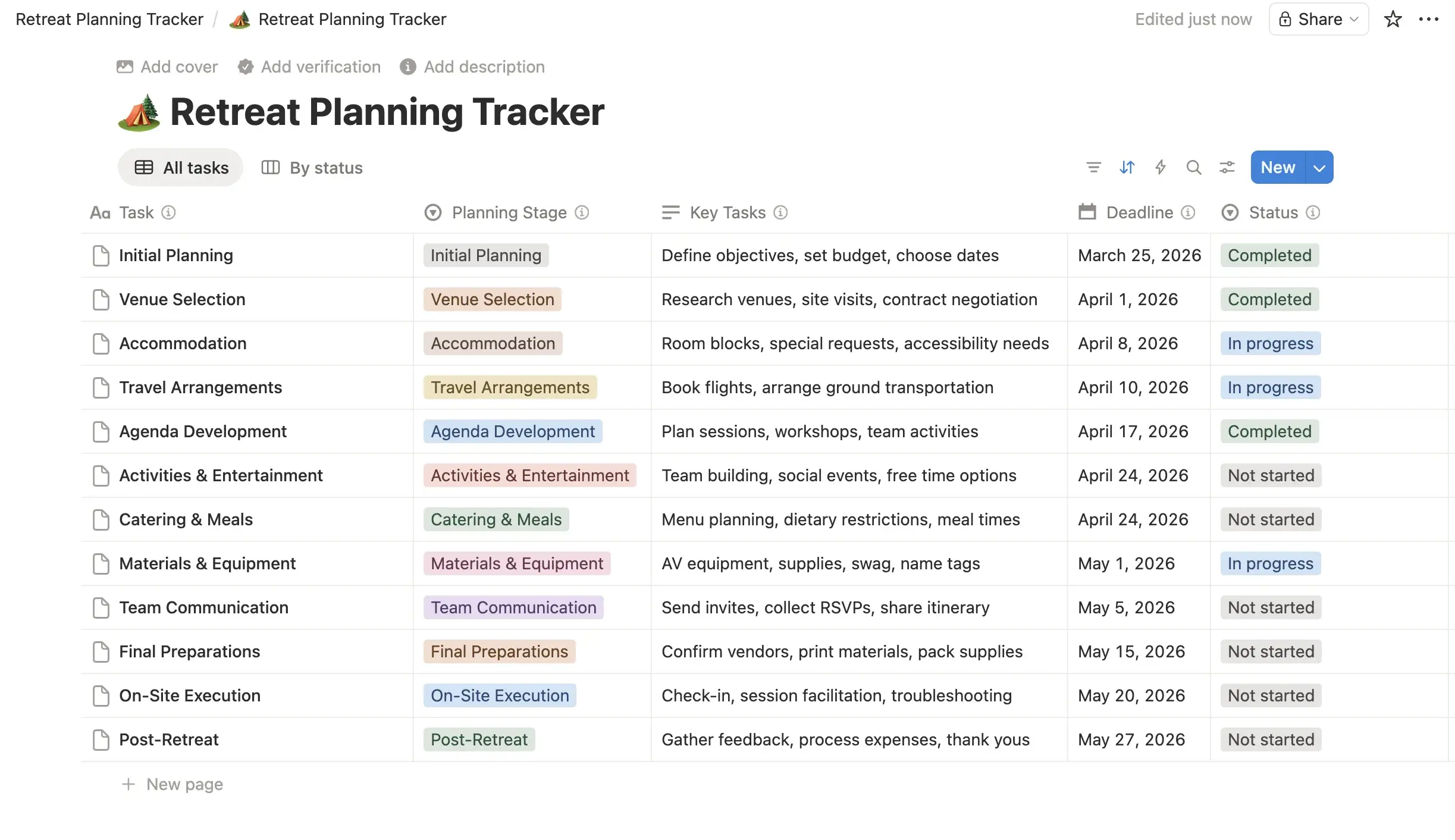
Notion is the most flexible option for retreat organizers who want to keep everything in one place. You can build a planning database, track tasks, store venue research, and manage a shared team workspace. It works especially well for smaller operations where the same person is handling logistics, marketing, and communications.
Airtable suits organizers who need more structured data, particularly those managing multiple retreats simultaneously or tracking complex logistics like room allocations, activity rosters, and supplier contacts. Its grid and kanban views make it easy to switch between a task list and a visual planning board.
Trello is a lighter-weight option if you just need a simple task board to track what's done and what isn't. Good for first-time retreat leaders who don't need a full database.
For budget tracking, most retreat planners work in a spreadsheet. Google Sheets normally does the job. What matters more than the tool is the structure: a clear breakdown of fixed costs (venue, facilitators) versus variable costs (catering per head, activity add-ons) so you can model different attendance scenarios.
Guest registration and management
How do many retreat organizers manage guest registration? By email or maybe a Google Form. This means collecting guest information through back-and-forth emails, chasing missing dietary details, and manually entering data into spreadsheets.
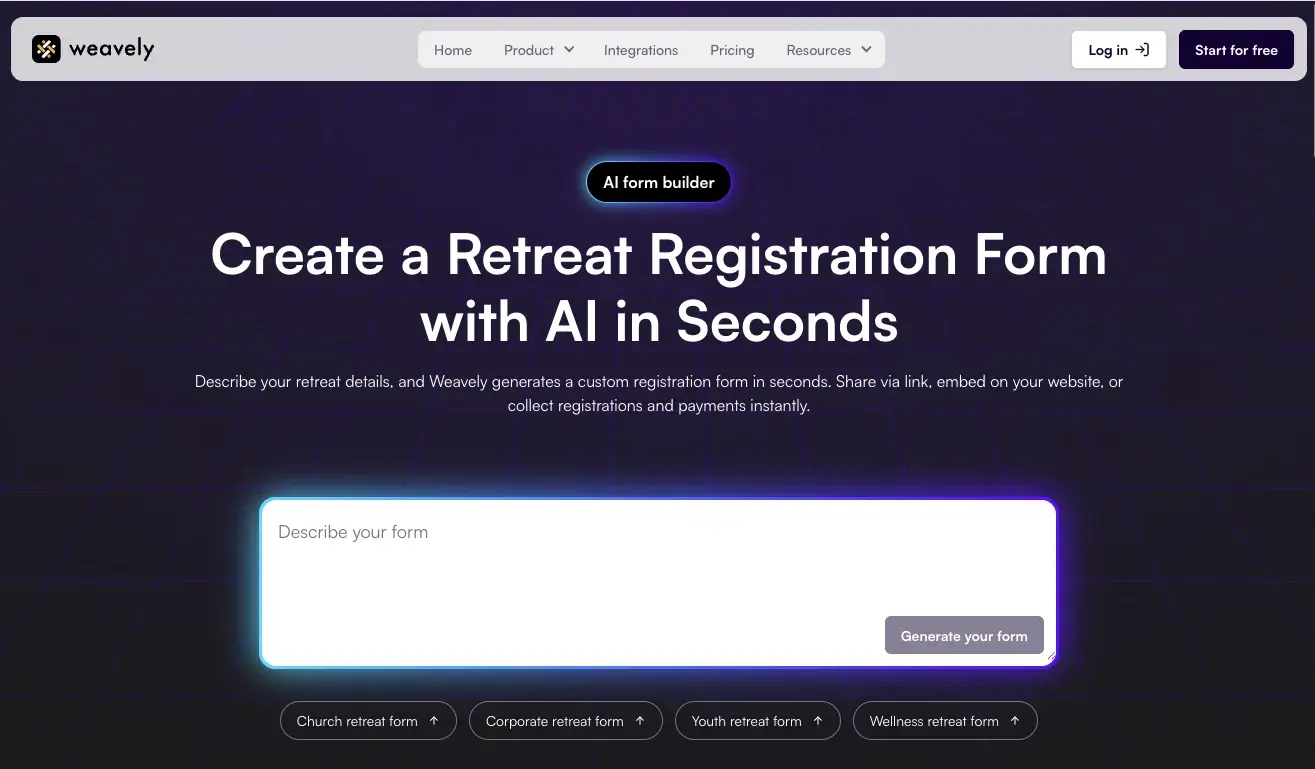
A structured online registration form solves this. Rather than building a generic form, the goal is to collect everything you need in one submission: personal details, emergency contacts, dietary requirements, health information, accommodation preferences, add-on selections, and signed agreements. For a detailed breakdown of what to include and how to structure the flow, see Guest registration forms for tours and retreats.
Weavely lets you generate a fully structured, multi-step retreat registration flow from a single prompt or a file. The form builder can also automatically apply conditional logic, which means guests only see the questions relevant to them. For example, a guest choosing shared accommodation sees roommate preference fields, others don't. Submissions sync automatically to Google Sheets, Notion, Airtable, or HubSpot, so your guest list stays current without manual data entry.
Weavely also offers consent and legal waiver form generators and templates. However, for retreats involving complex waivers requiring a formal signature, DocuSign or HelloSign can handle this and produce a legally defensible audit trail.
Marketing your retreat

Getting guests to register in the first place requires great marketing. In the retreat and wellness space, people are making a significant financial and personal commitment, often $500–$3,000 or more for a multi-day experience. That level of trust doesn't come from a single Instagram post. It's built through consistent presence, strong visuals, and a website that converts curiosity into action.
Photography and visual assets
Retreat bookings are heavily influenced by visual content, such as venue photography, past retreat highlights, and testimonials.
Professional photography is the highest-leverage marketing investment a retreat organizer can make. Venue shots, past retreat moments, facilitator portraits, and food photography all directly influence conversion. A well-photographed retreat page will consistently outperform an identical page with stock images or poor-quality photos. If budget is limited, prioritize venue and atmosphere over headshots. Natural light, candid group moments, and detail shots (a yoga mat on a terrace, a morning coffee setup) perform better on social than posed group portraits.
For design, Canva is the most practical choice for producing retreat marketing materials, including promotional graphics, venue guides, itinerary PDFs, and more. Even as a total beginner, you can create professional-looking materials without needing a designer.
Consistent social media presence is crucial. If you manage multiple channels, Metricool lets you schedule and manage content across platforms consistently, which matters when you're deep in logistics and social media tends to get neglected.
Paid campaigns

Meta ads (Instagram and Facebook) are the most effective paid channel for retreat marketing because the targeting is visual and interest-based. This way, you can reach people who follow yoga accounts, wellness influencers, or corporate offsite planning pages directly. The creative that works best tends to be venue photography or short video walkthroughs, not designed promotional graphics. Keep copy short and lead with the experience, not the logistics.
Google Search ads work well if you're targeting people with active intent. For example, searches like "yoga retreat Italy 2026" or "corporate offsite venue Scotland" indicate someone already in buying mode. The budget requirement is higher and the volume lower than Meta, but conversion rates are typically better because the intent is explicit.
For both channels, send paid traffic to a dedicated landing page for that specific retreat rather than your homepage. A focused page with a single CTA converts significantly better than a general website page with multiple navigation options.
Your retreat page as a conversion tool
Your retreat page is where interest closes into a registration. A high-converting retreat page has: a clear headline that names the retreat type and location, 4–6 strong photography hero images, a concise what's-included breakdown, facilitator credibility, testimonials from past participants, transparent pricing, and a registration form embedded directly on the page rather than linked elsewhere.
Communication with prospects and guests
A reliable communication workflow matters at two distinct stages: converting warm prospects into registered guests, and keeping registered guests informed and prepared in the weeks before arrival.
Brevo is a strong option for retreat organizers who need email automation without a steep learning curve or a large budget. You can set up automatic confirmation emails, pre-event reminders, and post-retreat follow-up sequences, all triggered by form submissions. It integrates directly with Weavely via Zapier.
EmailOctopus is a leaner, cheaper alternative worth considering if your list is small and your needs are straightforward.
One thing worth setting up from the start: a shared inbox or dedicated email address for retreat inquiries (hello@yourretreat.com rather than a personal Gmail). It keeps guest communication organised, looks more professional, and makes it easier to hand off if you bring on a co-organizer.
Itinerary building and on-the-ground management
Once guests are registered and the logistics are confirmed, you need to translate all of that information into a polished itinerary guests can actually use. This is not a mandatory step, and it largely depends on the nature of your retreat. However, if your trip includes multiple destinations, showing your guests an interactive itinerary they can follow would make the experience smoother.
Travefy is built specifically for this. It lets you take the guest data collected via registration and build mobile-friendly itineraries that participants can view, comment on, and approve. It also handles supplier bookings and allows you to build a simple travel website for each retreat. For tour operators managing complex multi-day itineraries with multiple transport legs, it significantly reduces the back-and-forth of itinerary revisions.
Travelopro offers similar itinerary functionality with the added ability to search and book flights, hotels, transfers, and activities directly within the platform — useful if you're managing the full logistics chain rather than working with a venue that handles accommodation independently.
For on-the-ground communication, a shared WhatsApp group or a Slack channel (for corporate retreats) remains the most practical way to keep guests informed in real time regarding arrival delays, retreat schedule changes, meeting points. No dedicated tool beats the one guests already have on their phone.
Post-retreat follow-up
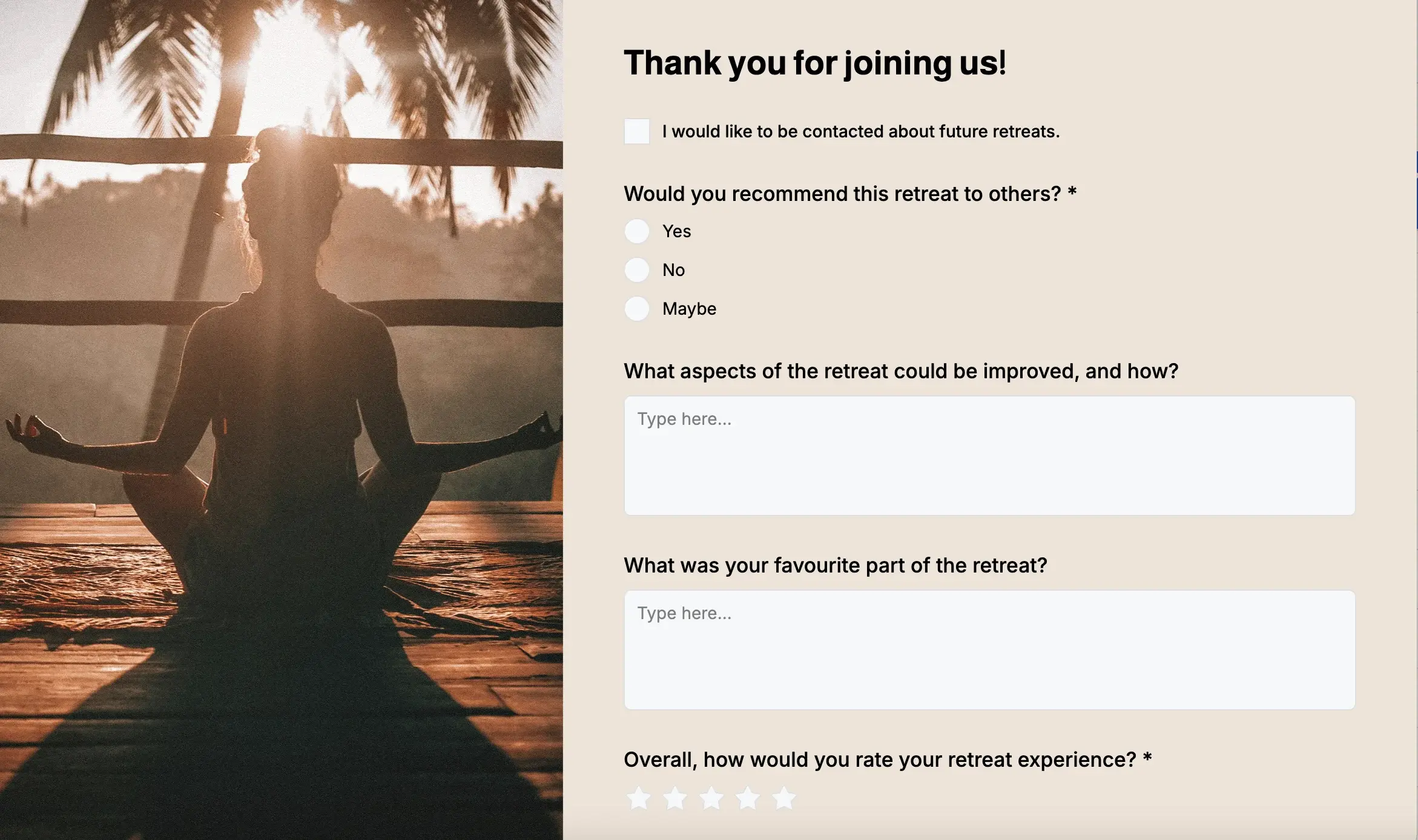
The retreat ends, but the guest relationship doesn't. While post-event follow-up is a goldmine for testimonials and repeat bookings, it remains one of the most frequently overlooked or inconsistent steps in a retreat organizer’s workflow.
A structured post-retreat feedback form collects the insights you need to improve future events and, if timed well, prompts guests to write a review or testimonial while the experience is still fresh. Weavely's post-trip feedback form template covers the key questions and can be sent automatically via a Brevo sequence triggered a few days after the retreat ends.
If you're running retreats regularly, your registration data also becomes a segmentation tool: guests who attended a wellness retreat are a warm audience for the next one. A clean CRM like HubSpot for growing businesses, Notion or Airtable for smaller operations lets you build those lists and target communications without starting from scratch each time.
Tatiana is the Growth Marketing Manager at Weavely, where she's spent nearly four years running marketing end to end. From campaign strategy to the SEO content that brings new readers to the platform. Working day to day on a form builder gives her a front-row seat to what actually makes forms, surveys, and landing pages convert, and that's what she writes about here: practical, tested advice on lead generation and form design. Before Weavely, she led brand and SEO work at Digital Leap and cut her teeth on B2B and B2C content at Ruddy. She's based in Brussels.