DOT Inspection Checklist: What Drivers and Fleets Need to Document (and How to Do It Digitally)
A DOT inspection checklist is not just a clipboard exercise. For a commercial motor vehicle on public roads, it is part of the documentation trail that shows the driver, motor carrier, and maintenance team checked the right vehicle components, found defects, made repairs, and kept the required records.
As of March 23, 2026, FMCSA explicitly authorizes electronic driver vehicle inspection report records to be created, signed, stored, and transmitted digitally. That means fleets can move beyond paper forms without wondering whether a digital inspection form is acceptable.
Key Takeaways
- DOT vehicle inspection requirements include pre-trip checks, daily driver vehicle inspection report workflows, and annual or periodic inspection records under 49 CFR Part 396.
- FMCSA's 2026 eDVIR rule confirms that DVIRs and related driver reports can be fully electronic.
- A DOT inspection checklist should cover service brakes, the parking brake system, steering, lighting, tires, coupling devices, emergency equipment, and Appendix A items.
- Digital forms help with compliance documentation, but they do not automatically make a motor carrier compliant.
- This guide shows how drivers, owner-operators, and fleet managers can build a practical digital workflow.
What a DOT Inspection Checklist Covers (and Why It Matters in 2026)
A "DOT inspection checklist" usually means the items drivers and fleets inspect and document under FMCSA Parts 392 and 396. It is different from a personal vehicle inspection checklist for state car registration. This article is about commercial vehicle inspections for CMVs.
The rules generally apply to a commercial motor vehicle rated 10,001+ lbs GVWR/GCWR, designed for 9 or more passengers including the driver, or placarded for hazardous materials. Vehicles that fall under the Department of Transportation's jurisdiction, including commercial motor vehicles such as semi-trucks and buses, are subject to a periodic inspection at least once every 12 months.
There are three layers to keep separate:
LayerRuleWhat it meansPre-trip inspection49 CFR §392.7The physical check before drivingDVIR49 CFR §396.11The written report for defects and required daily reportsAnnual / periodic inspection49 CFR §396.17A deeper inspection every 12 months
FMCSA's Electronic Driver Vehicle Inspection Reports final rule builds on 49 CFR 390.32 and removes doubt that DVIRs can be digital.
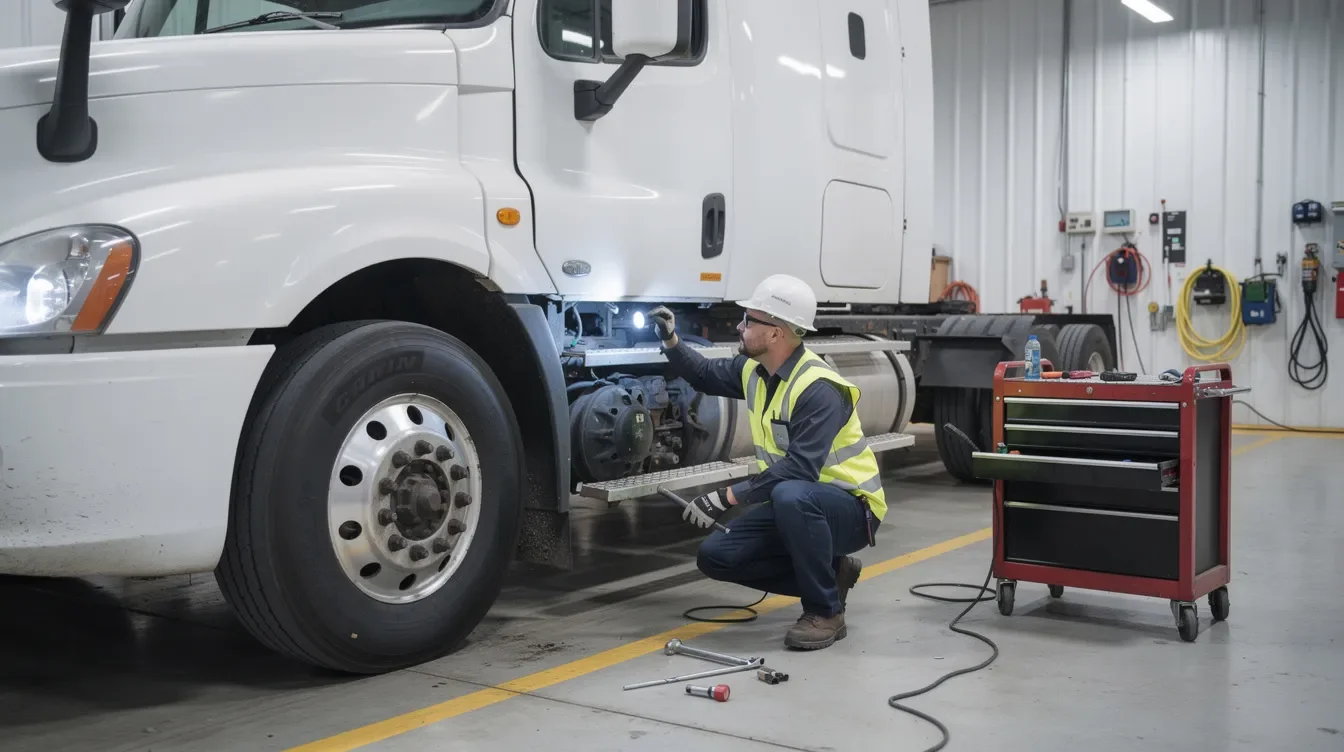
Pre-Trip vs. DVIR vs. Annual: The Three DOT Inspection Layers
Many fleets say "DOT inspection" when they mean a pre trip inspection, a DVIR, or a dot annual inspection. A strong checklist keeps them connected but distinct.
Pre-Trip DOT Inspection Checklist (Physical Check Under §392.7)
The pre-trip inspection is the driver's physical check that the vehicle is in safe operating condition before operating on public roads. Federal rules do not require a written report for every pre-trip, but many motor carrier policies do.
A practical pre-trip checklist for a commercial vehicle should include:
- Approach and walk-around: leaks under the vehicle, leaning, visible body or frame damage, secured cargo, license plates, and mud flaps.
- Engine compartment: engine oil, coolant, power steering, and washer fluid levels; belts and hoses for cracks, fraying, or leaks; the battery secured with clean terminals; and no visible fluid leaks.
- Air brake system: pressure build-up and governor cut-out, the low-pressure warning device, an air loss/leakage check, brake adjustment and pushrod travel, brake drums and linings, the tractor protection valve, and trailer brake (glad hand) connections.
- Steering: minimal free play, no loose or missing components, and no leaks at the steering box.
- Lights and reflectors: headlights, tail, brake, turn, clearance, and marker lights all working; reflectors present and clean.
- Tires and wheels: tread depth (at least 4/32 inch on steering-axle tires and 2/32 inch on all other tires under FMCSA standards), even wear, proper inflation, and no cuts or bulges; rims, lug nuts, and hubs secure with no cracks or oil seepage.
- Coupling: fifth wheel, kingpin, locking jaws, mounting, pintle hooks, safety chains, glad hands, air hoses, electrical pigtail, and landing gear.
- Cab and safety equipment: mirrors, horn, wipers and washers, windshield condition, seat belts, and required emergency equipment such as a fire extinguisher, warning triangles, and spare fuses.
Driver Vehicle Inspection Report (DVIR) Checklist Under §396.11
A DVIR is the end-of-day written report. It is not the physical inspection itself.
For property-carrying CMVs, a DVIR is required when the driver finds or is notified of a defect that affects safety or could cause a breakdown. For passenger-carrying CMVs, a DVIR is required each day the vehicle is used, even if no defects are found, unless an exemption applies.
The DVIR form should cover at least:
- service brakes, including trailer brake connections
- parking brake
- steering mechanism
- lighting devices and reflectors
- tires
- horn
- windshield wipers
- rear-vision mirrors
- coupling devices, including fifth wheels and pintle hooks
- wheels and rims
- emergency equipment
The checklist should help the driver identify defective components, mark OK or defective, and describe defective components clearly. "Left rear turn signal out" is better than "lights bad."
The signature chain matters, and it happens across more than one moment:
- The driver prepares and signs the driver vehicle inspection report.
- A carrier official or mechanic certifies that repairs were completed or unnecessary.
- The next driver reviews and acknowledges the vehicle inspection report before operating the vehicle.
For team drivers, one signature is enough if both agree on the defects and condition of the vehicle.
Annual / Periodic Inspection Checklist Under §396.17 and Appendix A
The annual inspection, also called a periodic inspection, is separate from the DVIR. It must happen at least once every 12 months and follow Appendix A to Part 396.
During an annual DOT inspection, critical components such as the brakes, tires, lighting systems, and steering mechanisms are thoroughly examined against the minimum standards. A full FMCSA annual inspection typically takes between 30 and 90 minutes, depending on the shop and the number of technicians involved.
Under FMCSA regulations, the components inspected during a periodic inspection include the brake system, coupling devices, exhaust system, fuel system, lighting devices, steering mechanism, suspension, frame, tires, wheels, rims, and windshield wipers. The process includes a visual check of the vehicle's exterior and interior plus functional testing of the braking, steering, and lighting systems, along with an assessment of tires, wheels, and suspension components.
An annual inspection report must include the inspection date, vehicle identification, motor carrier name, inspector name, components inspected, results, and certification. A qualified inspector must prepare a report that identifies the vehicle inspected and describes the results, including any components not meeting minimum standards. The original or a copy of the inspection report must be retained by the motor carrier for 14 months from the date of the report.
Building a Practical DOT Inspection Checklist: Required Components
Your inspection form should match the vehicle being inspected: tractor, straight truck, trailer, bus, power unit, or intermodal chassis. It should never fall below the requirements in §396.11 and Appendix A.
Start with:
- Motor carrier name, principal place of business, unit number, VIN, plate, and odometer or hub reading.
- Driver name, date, time, location, trailer number, and whether the vehicle inspected is safe to operate.
- Defect description, out-of-service status, photos, driver comments, repairs, and certification fields.
Then group the components:
- Brakes: service brakes, parking brake system, antilock brake system, air compressor, brake drums, brake tubing, vacuum and hydraulic systems where used, automatic brake adjusters, low-pressure warning device, tractor protection valve, brake linings and pushrod travel, and trailer brake connections.
- Tires and wheels: check tread depth against FMCSA standards (at least 4/32 inch on steering-axle tires and 2/32 inch on all other tires), and inspect rims, hubs, lug nuts, sidewalls, inflation, and embedded objects.
- Coupling: fifth wheels, kingpin, locking jaws, platform, mounting bolts, pintle hooks, safety chains, glad hands, air hoses, electrical pigtail, landing gear, and saddle mounts where applicable.
- Cab and body: mirrors, horn, emergency equipment, safety devices, seat belts, motorcoach seats, emergency exits, rear impact guard, doors, cargo securement, frame rails, crossmembers, and mud flaps.
- Specialty equipment: reefer units, liftgates, buses, hazmat equipment, or intermodal equipment provider assets.
If an intermodal equipment provider is involved, make sure the form captures which party owns the equipment and who receives the defect notice.

Where Paper Checklists Break: Common DVIR and Inspection Report Gaps
Paper still works, but it breaks in predictable ways: illegible handwriting, missed boxes, missing signatures, and forms that do not include the right inspection criteria.
Recordkeeping is the bigger problem. DVIRs get lost in cabs. Repair certifications get separated from the original written report. Annual inspection documents are filed by shop name instead of vehicle number. During DOT audits, that creates risk.
In the Commercial Vehicle Safety Alliance's 2025 International Roadcheck — a 72-hour blitz of 56,178 commercial vehicle inspections across North America — 18.1% of vehicles were placed out of service, with brakes and tires the leading violations. Many of those defects are exactly what timely repairs and a thorough inspection report would have caught. Civil penalties for recordkeeping violations can exceed $1,500 per day per violation, with caps above $15,000, and serious issues can lead to a roadside out-of-service order.
Retention is also easy to get wrong. Maintenance records under §396.3 apply to every vehicle a carrier controls for 30 days or more, and must be kept where the vehicle is housed for one year while it is in service plus six months after it leaves the fleet. On top of that, carriers must keep DVIRs for 3 months and annual inspection reports for 14 months.
Digitizing Your DOT Inspection Checklist and DVIRs
The 2026 FMCSA rule makes electronic DVIR workflows practical for fleets of any size. Electronic records were already allowed under 49 CFR 390.32, but now drivers can complete, sign, transmit, and store DVIRs without paper ambiguity.
A good digital DOT inspection form should include:
- Required component checkboxes with OK or defect options.
- Separate truck, tractor, trailer, and bus sections.
- "No defects noted" and "defect found" options.
- A driver signature field captured at the end of the report.
- Photo and document uploads for defect photos and repair invoices.
- Each submission automatically dated and stored in one place.
Going digital also makes records easier to find and produce. Instead of digging through a cab or a filing cabinet, you can pull up stored responses to support the 3 months of DVIRs or 14 months of periodic inspection records you need during an audit. It also helps maintenance teams see the defect, with a photo attached, instead of guessing what "bad tire" means.
One thing a single form cannot do on its own is run the full signature chain. The driver's report and signature are one step; the mechanic's repair certification and the next driver's acknowledgment happen later, by different people. Plan those as separate steps in your workflow rather than expecting one submission to close the loop.
Using Weavely to Create a DOT-Ready Inspection Form
Weavely helps you digitize your inspection process by generating DOT inspection and DVIR-ready forms from natural-language prompts. It does not guarantee compliance, but it makes the documentation process much easier to standardize.
Weavely builds what you describe, and it rarely stops to ask follow-up questions, so the more specific your prompt, the closer the first draft. Rather than asking for "a DOT inspection form" and hoping it knows the rules, spell out the exact components and fields you need. A detailed prompt like this gets you most of the way there:
"Build a multi-page DOT driver vehicle inspection report.
Page 1 — Vehicle and driver details: carrier name, unit number, VIN, license plate, odometer reading, driver name, date, time, location, and a yes/no field for whether the vehicle is safe to operate.
Page 2 — Tractor inspection: a checkbox group with OK and defect options for service brakes, parking brake, steering, lighting and reflectors, tires, horn, windshield wipers, mirrors, coupling devices, wheels and rims, and emergency equipment, plus a long-text field to describe any defects.
Page 3 — Trailer inspection: OK and defect checkboxes for brakes and brake connections, lights and reflectors, tires, wheels and rims, coupling and kingpin, landing gear, and doors, plus a long-text field for defect details.
Page 4 — Sign-off: a file upload for defect photos, a long-text field for driver comments, and a signature field for the driver."
You can build from the dot inspection checklist generator, reuse a dot inspection / DVIR template, or create related forms such as a pre-trip inspection form, trailer inspection form, and truck inspection form.
Responses are collected and stored in one place, and you can connect them to Google Sheets or send them to your maintenance and fleet tools through Zapier, Make, or n8n. File-upload fields can capture defect photos, repair invoices, and other inspection documentation. For the parts of the process a single form does not cover, such as mechanic repair certification and the next driver's review, keep handling those as their own steps.
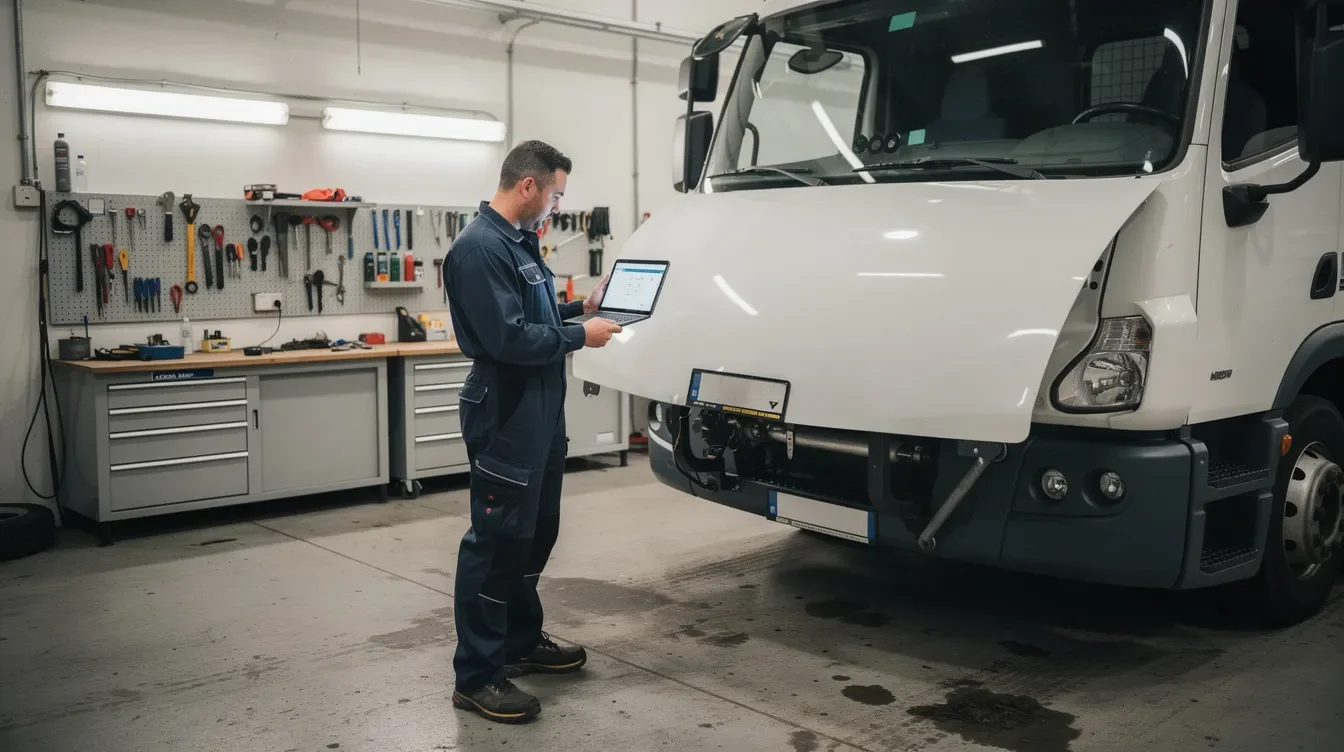
The Honest Compliance Picture: What a Digital Checklist Can and Cannot Do
A digital form helps document inspections. It does not automatically make a motor carrier compliant.
Carriers still own the duty to inspect vehicles at the right times, make repairs, and keep records. DVIRs and repair certifications must be kept at least 3 months. Annual or periodic inspection reports must be kept at least 14 months.
The repair-certification chain is also a real workflow, not a single click. The driver completes the report, maintenance certifies the repairs or says they are unnecessary, and the next driver reviews the report before operating the vehicle.
Annual inspections must be completed by a qualified inspector under §396.19. To qualify, an inspector must understand the inspection criteria in Part 393 and Appendix A and be able to identify defective components. That means completing a Federal or State-sponsored training program, holding a certificate from a State or Canadian Province that qualifies them to perform commercial motor vehicle safety inspections, or having a combination of training or experience totaling at least one year, which may include a manufacturer-sponsored training program or experience as a mechanic or inspector.
A commercial garage, fleet leasing company, truck stop, or similar business can perform annual inspections only if it employs qualified inspectors. If your business runs its own shop, keep proof that each inspector met the training or experience requirements.
Conclusion: Turn Your DOT Inspection Checklist Into a Digital Workflow
DOT inspection requirements span pre-trip checks, DVIRs, and annual inspections. Each has different timing, documentation, and responsibility.
The 2026 eDVIR rule removes the paper-only mindset. A well-built digital DOT inspection checklist helps drivers inspect the right equipment, complete the right report, document defects, route repairs, and produce records faster during audits.
Use Weavely's dot inspection checklist generator or dot inspection / DVIR template to create your own digital inspection form and connect it to your existing fleet workflow.
FAQ
These FAQs cover common questions about DOT inspections, DVIRs, and recordkeeping.
What is a DOT inspection?
A DOT inspection is an evaluation of a commercial motor vehicle, driver, or carrier record against FMCSA safety rules. It can include a roadside inspection, a DVIR, or an annual periodic inspection. In this article, "DOT inspection checklist" means the commercial checklist used for FMCSA documentation, not state personal car inspections.
Can I do my own annual DOT inspection?
Yes, but only if you meet the FMCSA definition of a qualified inspector. FMCSA does not issue one universal license, but the motor carrier must be able to prove the inspector has the required knowledge, training, or experience. Many fleets use in-house technicians, a commercial garage, or mobile DOT inspection providers.
Is a post-trip inspection required by DOT?
DOT rules do not use "post-trip inspection" as the main legal term. Under §396.11, a driver vehicle inspection report is required at the end of the day for property-carrying CMVs when defects are found or reported, and daily for passenger-carrying CMVs unless an exemption applies. Many fleets still require a post-trip walk-around as company policy.
What is a Level 1 DOT inspection?
A Level 1 DOT inspection is the most thorough North American Standard roadside inspection. It checks driver credentials and vehicle systems such as brakes, steering, tires, lights, cargo securement, and coupling. A clean Level 1 or Level 5 inspection may satisfy the annual inspection only if it covers all Appendix A components and is properly documented.
How long do I have to keep DVIR records, and can they be electronic?
Motor carriers must keep DVIRs and repair certifications for at least 3 months. Annual or periodic inspection reports must be kept for at least 14 months. These records can be electronic, and FMCSA's 2026 final rule explicitly allows DVIRs to be created, signed, transmitted, and stored digitally.

Tatiana is the Growth Marketing Manager at Weavely, where she's spent nearly four years running marketing end to end. From campaign strategy to the SEO content that brings new readers to the platform. Working day to day on a form builder gives her a front-row seat to what actually makes forms, surveys, and landing pages convert, and that's what she writes about here: practical, tested advice on lead generation and form design. Before Weavely, she led brand and SEO work at Digital Leap and cut her teeth on B2B and B2C content at Ruddy. She's based in Brussels.